Hexagram 50:

dǐngthe cauldron, crucible, sacrificial vessel

Upper TrigramWind
Lower TrigramFire

Judgment

dǐnga, the cauldron, crucible, sacrificial vessel
yuánfirst-rate, excellent; a, the most
promise, opportunity; promising
hēngand fulfillment, satisfaction; offering

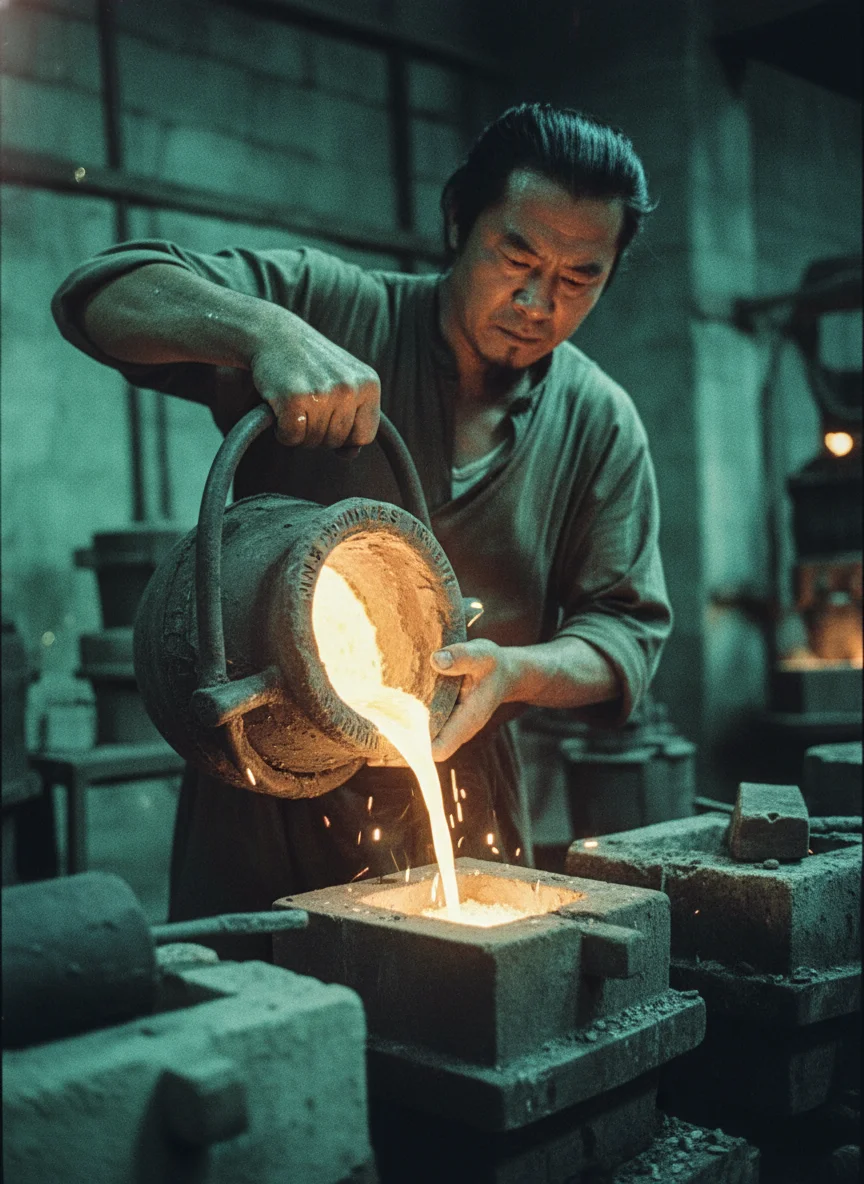
The caldron. Supreme good fortune. Success. When civilization reaches its cultural peak, the vessel holds refined nourishment. What is prepared here will feed many, though the vessel itself may not be recognized immediately.

Image

the wood
shàngover, above, atop, on top of
yǒuis, there is
huǒa, the fire, flame
dǐngthe cauldron
jūna, the noble, worthy, honored
young one, heir, disciple
according to; with, by; uses, applies
zhèngthe precise, correct, exact(ing); principle(s)
wèiof placement, position(ing), condition(s)
níngto realize, manifest, consolidate, coagulate
mìnga, the higher law, purpose, order, power

Fire over wood: the image of the caldron. Thus the superior man consolidates his fate by making his position correct. The fate depends on wood below—as long as there is fuel, the fire burns above. Maintain the foundation, and the cultural work continues.

Digital Artifact

The Xerox Alto's Bitmapped Display

Butler Lampson, Chuck Thacker, et al. (1973)

The Alto wasn't just a computer—it was a ritual object. Xerox PARC engineers built it not for accounting or payroll but for something more fundamental: to nourish the work of creating software civilization itself. The bitmapped display, the three-button mouse, Ethernet networking—these weren't features, they were the caldron's handles and legs. The machine was designed to hold and prepare something more refined than data: it held ideas about how humans and computers should interact. The Alto itself would never ship commercially, but everything it contained would be drawn from again and again. Jobs would visit in 1979 and see the future. The GUI, the mouse, the WYSIWYG editor—all there, cooking in the caldron. The Alto was infrastructure for culture, the vessel that held the refined essence of interactive computing until the time came for it to be served to the world.

Historical Context

Period
Zhou Dynasty
Oracle Bone Etymology
Fire (☲) sits below, Wind (☴) sits above—flame rises through wood, the image of prepared nourishment.
Traditional Use
Wilhelm describes the ting (caldron) as the cultural superstructure of society—the vessel that holds refined nourishment for civilization. Unlike the well (social foundation), the caldron represents the spiritual, cultural peak.

Lines

Line 1: 鼎顛趾利出否得妾以其子無咎

dǐnga, the cauldron('s)
diānwith upended, (up)turned (up), inverted
zhǐfeet, legs, stand
worthwhile, rewarding, beneficial, gainful
chūto expel, remove; get, pour out; get rid of
the stagnant(ating, ation), decay; inferior
to accept, acquire, receive, find (ing)
qièa, the concubine, mistress, handmaiden
for (the sake of); in order, thereby (to have)
her; an, another
a child, young one; heir
no; is not; nothing; without, with no
jiùblame; is wrong; a mistake, an error

Line 2: 鼎有實我仇有疾不我能即吉

dǐngwhen, the cauldron
yǒuhas, holds, possesses, contains, retains; with
shícontent(s), substance, results; the genuine
our, my
chóurival, adversary, counterpart, opponent (s)(')
yǒuwill have, hold, possess, contain, retain (s)
anxiety(ies), distress; affliction, ailment (s)
it, this is not, outside of
our, my
néngin, within v power(s), range, scope
to pursue; or reach; of pursuit(s); problem
promising, auspicious, opportune, timely

Line 3: 鼎耳革其行塞雉膏不食方雨虧悔終吉

dǐnga, the cauldron('s), with
ěrears, handles are, have been
changed, altered, modified
its, one's own
xíngfunction, action, movement (s); performance
is, are impair, hinder, impede, hamper (ed)
zhìa, the pheasant's
gāorich, fat, juicy, delicate meat gravy
is not; will not be; goes un-
shíeaten, consumed, fed upon; food
fānga sudden, quick; suddenly; right, just now
rain
kuīwould diminish, decrease, lessen (s)
huǐthe regret(s), remorse
zhōngat, in the end, eventually, ultimately
promising, fortuitous; an opportunity

Line 4: 鼎折足覆公餗其形渥凶

dǐnga, the cauldron('s), with
zhéa broken, defective
leg, stand, base, basis, support, footing
overturning, spilling, upsetting
gōnga, the duke's, prince's, lord's, high noble's
simple meal, rice stew [w/ meat & veggies]
his
xíngperson, form, visage, appearance, dignity
is soaked, soiled, smeared, stained
xiōngwoe, trouble; unfortunate, disappointing

Line 5: 鼎黃耳金鉉利貞

dǐnga, the cauldron('s), with
huánggolden, yellow, harvest gold, earth yellow
ěrears, handles
jīnand metal, bronze, gilded
xuàngrip, haft; carrying bar, pole
it is worthwhile, rewarding, beneficial
zhēnto persist; be loyal, dedicated, steadfast

Line 6: 鼎玉鉉大吉無不利

dǐnga, the cauldron('s), with
a jade
xuàngrip, haft; carrying bar, pole
much, great, full of, a lot of; very
promise, hope, opportunity; promising
without; there is nothing
not
worthwhile, (turned to) advantage(ous)

Practical Guidance

You're building the vessel that holds what others will consume. Not the product itself—the caldron. Here's what this probably means: the thing you're making won't ship as-is. You already know this, or you suspect it. The Alto never shipped commercially. But it didn't need to. What it held—the bitmapped display, the mouse, the GUI, the networking protocols—that's what mattered. Let it cook. The classical text splits the well (social foundation, basic needs) from the caldron (cultural superstructure, refined nourishment). You're doing caldron work. Not solving immediate business problems. Preparing the feast that will feed people for decades. PARC engineers understood this. Build openly, let the preparation complete, wait for someone ready to draw from it. When Jobs visited in 1979, the nourishment was ready. He didn't take the vessel—took what it held. That's the pattern. Your job is to refine the essence, tend the fire, make the transformation complete. Direct credit may not come. The caldron doesn't eat its own cooking. But the work feeds the culture. That's not consolation—it's the actual function. The dangers the text identifies: broken legs (attempting work beyond your capacity, the vessel shatters) or altered handles (your work is sound but nobody can access it). The Alto avoided both. The engineers were capable. The vessel was accessible enough that the right people could see what it held and understand. This is different from hiding your work. The caldron sits in the center of the cultural space. People see it. PARC published papers, gave demonstrations. The work was visible. The timing was what mattered—the nourishment needed time to refine. Build the vessel correctly. Tend the fire. Let the transformation complete. Someone will come who's ready to draw from what you've prepared.

Get an interactive reading with this hexagram

Try the Oracle →