Hexagram 42:

increase, expand, gain, add, augment (ing)

By Augustin Chan · Last updated 2025

Upper TrigramWind
Lower TrigramThunder

Judgment

increase, expand, gain, add, augment (ing)
worth(while), reward(ing), benefit(icial)
yǒu(to) have, find, take on; (if) there is
yōusomewhere; (a) place, direction, purpose
wǎngto go, move towards; in going; ahead
(it is) worthwhile, rewarding, favorable
shèto cross, ford, ferry, venture, experience
(the) great, big, major
chuānstream, river, current, water (s)

Increase. It furthers one to undertake something. Cross the great water. Times like these don't last—use them. Execute the project. Start the build. The conditions are favorable.

Image

fēngwind
léithunder
increasing
jūnnoble, worthy, honored
young one, heir, disciple
accordingly, therefore, thus
jiànseeing, (upon) see(ing); perceive, observe
shànvirtue, goodness; good, virtuous, excellent
and (so, then)
qiānmoves to, migrates to; embraces, adopts
yǒu(if, when) having; (when) there is
guòexcess(es), fault(s), error(s)
and (so, then)
gǎicorrects, reforms; changes, alters, reforms

Wind and thunder: the image of increase. The superior man sees good and imitates it; perceives faults and eliminates them. Active self-improvement through observation and correction.

Digital Artifact
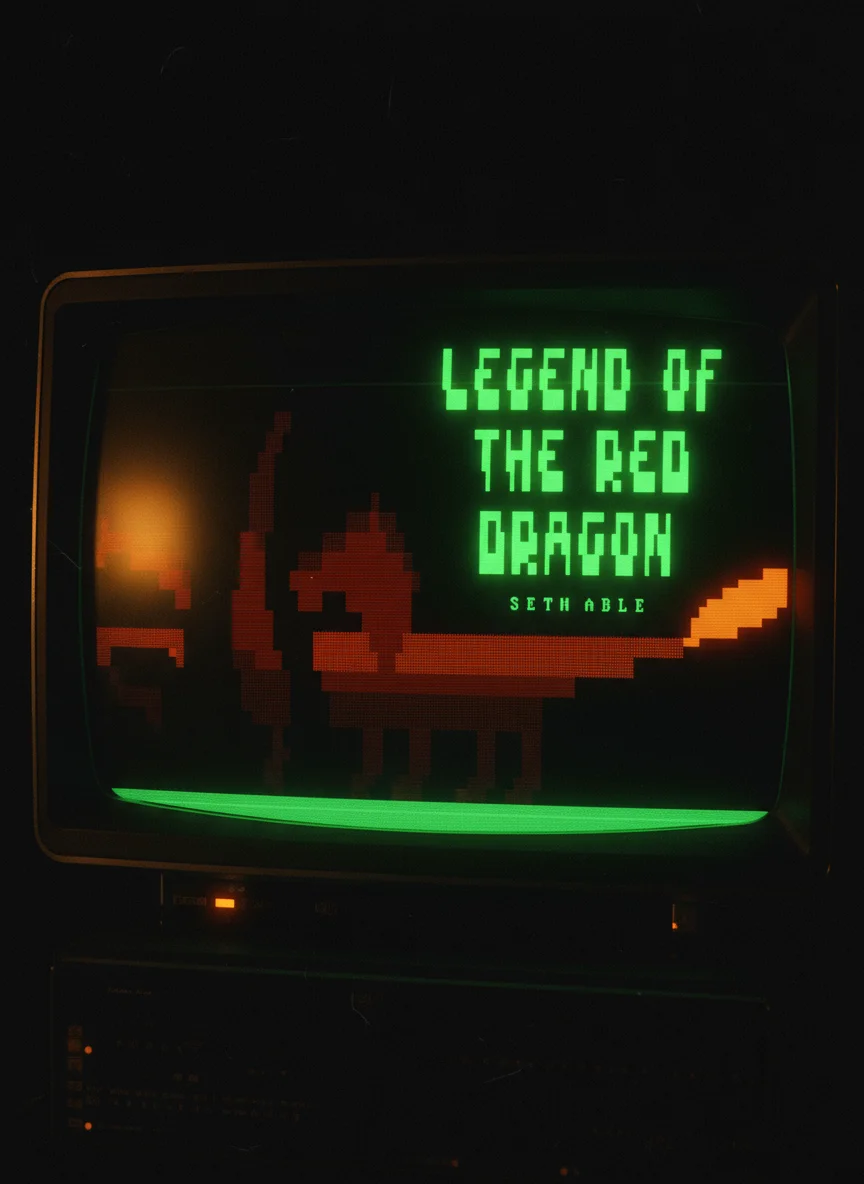
Hexagram 42 digital artifact

Multiplayer BBS Door Games: LORE and Legend of the Red Dragon

Seth Able Robinson (1989)

In 1989, Seth Able Robinson released Legend of the Red Dragon, the BBS door game where that pixelated red dragon on the title screen unified thousands of local dial-up communities. You'd connect at 2400 baud—that screech-and-handshake—and get your daily turns. But unlike single-player games, your actions rippled through the entire server. Kill the dragon? Everyone benefits. Gain a level? The whole community's power distribution shifts. The game explicitly incentivized the strong descending to help the weak: marriage bonuses for partnerships, mentorship rewards, economic interdependence woven into the mechanics. Meanwhile, the sysop maintained the hardware and phone lines at personal expense so strangers could play together. Hexagram 42 is Increase (益)—thunder below, wind above, each force amplifying the other. LORD worked because it was architected as mutual increase: the strong descending to strengthen the weak, generous action propagating through the network, the red dragon watching over fellowship born from sacrifice.

Historical Context

Period
Zhou Dynasty
Oracle Bone Etymology
Wind (☴) sits above, Thunder (☳) sits below—gentle penetration over arousing movement.
Traditional Use
The classical text describes increase as the strong above descending to strengthen the weak below—not forced redistribution, but natural flow like wind and thunder amplifying each other.
Character Analysis
Thunder rises from below, wind descends from above, and in their interaction both forces intensify. Neither diminishes; both gain.
Energy State
Mutual amplification, generative increase. Read bottom to top: yang line from above has descended to foundation (Thunder), creating upward arousing force that meets downward gentle penetration (Wind).
Trigram Symbolism
☴ Wind (Upper) - Gentle, penetrating, descending ☳ Thunder (Lower) - Arousing, movement, rising Wind and thunder increase each other's power.

Sources

Lines

Line 1: 利用為大作元吉無咎

worthwhile
yòng(to be) applied? practiced? carried out?
wéi(to) effect
great
zuòworks
yuánmost
promising
no
jiùblame

Line 2: 或益之十朋之龜弗克違永貞吉王用享于帝吉

huòsomebody
increases
zhī(to) (this) one
shí(by) ten
péng(matched) pairs
zhīof
guītortoise
(one) (is) not
able
wéi(of
yǒngeverlasting
zhēnpersistence
(is) promising
wáng(a
yòngapplies
xiǎng(the) offering
to
god
promising

Line 3: 益之用凶事無咎有孚中行告公用圭

increase(ing)
zhīis that of
yòng(the) way
xiōngill-omened
shìevents
no
jiùblame
yǒu(if
sincerity
zhōng(the) central
xíngconduct
gàoannounce
gōng(to the) prince
yòng(one) uses
guī(a) jade tablet

Line 4: 中行告公從利用為依遷國

zhōng(the) central
xíngconduct
gàoannounce
gōng(to the) prince
cóng(who) follows
worthwhile
yòng(to be) applied
wéi(to) effect
a mainstay
qiān(in) moving
guó(the) nation

Line 5: 有孚惠心勿問元吉有孚惠我德

yǒu(if
sincerity
huì(and a) kind(ly)
xīnheart
not at all
wènquestion
yuánmost
promising
yǒu(there is
sincerity
huìkind(ness)
my
virtue

Line 6: 莫益之或擊之立心勿恆凶

no one
increases
zhīthis
huòsome
strike(s)
zhīthis
(to) establish
xīnheart
not at all
héngconstancy
xiōng(is) ill-omened

Practical Guidance

You're experiencing actual growth. Not the aspirational kind, not the hockey-stick projection in the deck—real expansion of capability happening right now. The system's working, resources are available, momentum exists. Here's what this probably means: you have a window. Every developer who's experienced a truly functional team knows the feeling—features shipping, bugs getting fixed, communication flowing. It's tempting to think it will last forever. It won't. Teams change, requirements shift, resources get reallocated. The move isn't to hoard the increase or protect it defensively. The move is to build something during this window. Those BBS sysops didn't save their resources for later—they expanded the door game selections, upgraded the hardware, added more phone lines. They used the increase to generate further increase while it was available. Same principle in your code: when you've got momentum, when the architecture's solid and the team's aligned—that's when you tackle the ambitious refactor, implement the complex feature, pay down the technical debt you've been carrying. Not recklessly, but decisively. The classical text is correct about the danger: this state is temporary. It's a window. Use it well, or watch it close.

Transformations

When changing lines appear in a reading, this hexagram can transform into another.

Get an interactive reading with this hexagram

Try the Oracle →