Upper TrigramMountain
Lower TrigramLake
Judgment
損sǔndecrease, diminish, reduce, economize (ing)
有yǒuhave, find; remember
孚fútrue, sincere; confidence; to trust
元yuánmost, supremely; excellent, outstanding
吉jípromising, fortunate; promise, opportunity
無wúno; nothing; (this is) not; without, with no
咎jiùblame; (is) wrong; (a) mistake, (an) error (s)
可kě(but it) call, ask (s) for; indicates (ing)
貞zhēnpersistence, resolution, resolve, focus
利lìworth(while), reward(ing), benefit(icial)
有yǒu(to) have, find, take on; (if) there is
攸yōusomewhere; (a) place, direction, purpose
往wǎngto go, move towards; in going; ahead
曷héhow; what, when, where
之zhīis this; is, will be
用yòng(to be) applied? practiced? carried out?
二èrtwo; a couple, pair of
簋guǐ(small, simple, plain) rice baskets; "gui" tureens
可kěcould, may, might be (sufficient)
用yòngpresented, offered, consecrated, used
享xiǎng(as, for, in) (an, the) offering, sacrifice
Decrease with sincerity brings supreme good fortune. Not what you remove, but what you enable by removing it.
Image
山shānmountain
下xiàbelow, beneath; at the base, foot of v
有yǒuis, there is
澤zé(a, the) lake, pool, pond, wetland, marsh
損sǔndecreasing
君jūn(a, the) noble, worthy, honored
子zǐyoung one, heir, disciple
以yǐaccordingly, therefore, thus
懲chéngcorrects, curbs, rectifies, precludes, rules out
忿fènhard feeling, ill will, resentment, indignity (s)
窒zhì(and) controls, contains, resists, restrains
欲yùdesires, temptations, passions, cravings
At the mountain's foot, the lake: the superior man restrains excess, strengthens the core. Future Crew didn't add more storage—they transformed constraint into generative technique.
Digital Artifact
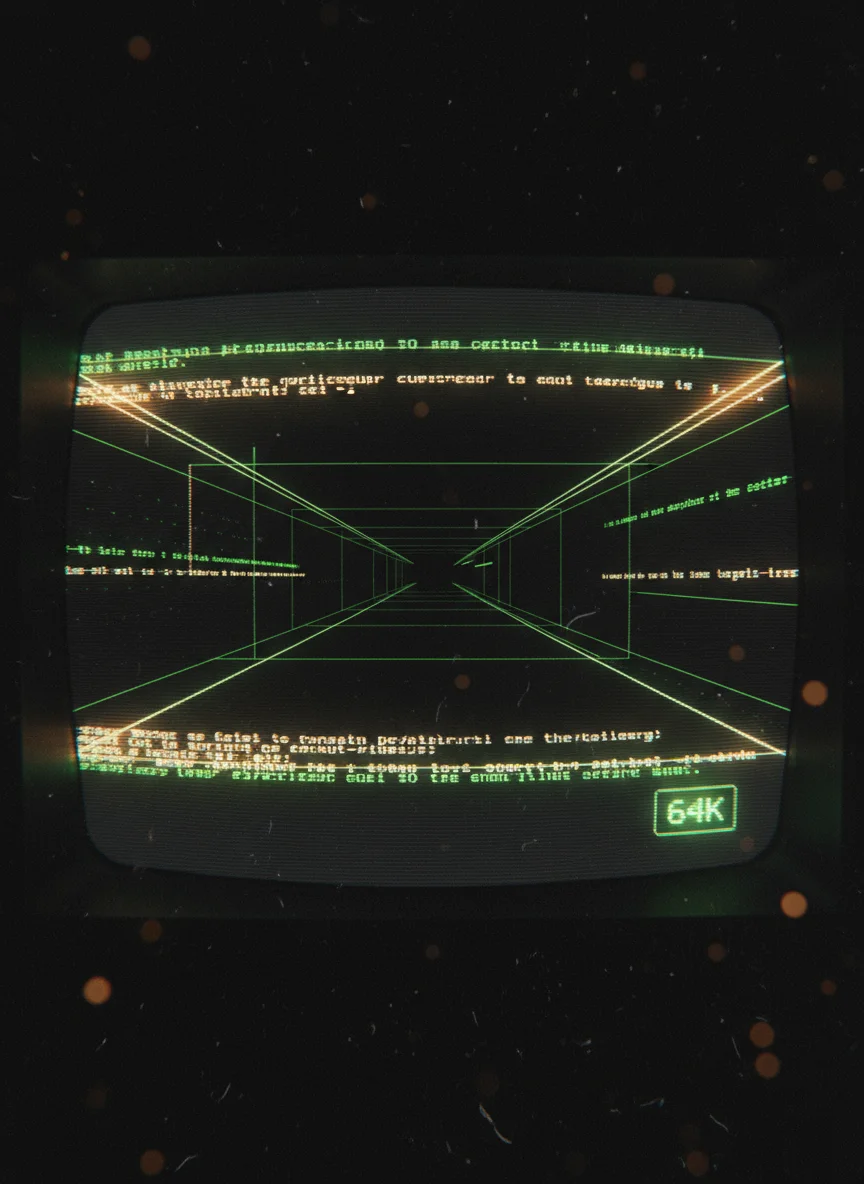
Second Reality — 64K Constraint
Future Crew (AD 1993)
A cathedral in 64 kilobytes. 損 isn't loss; it's transfer—the lower gives so the upper can rise. Demoscene coders cut assets to the bone and grow everything procedurally: textures, meshes, music, motion. Every byte surrendered becomes altitude for the idea.
Historical Context
- Period
- Zhou Dynasty
- Oracle Bone Etymology
- ☶ Mountain over ☱ Lake — foundations feeding ascent. The lower 'lake' evaporates to nourish the 'mountain.'
- Traditional Use
- Decrease with sincerity: remove what doesn't serve the aim; channel saved energy upward.
- Character Analysis
- The 64K intro class formalizes constraint; you trade stored data for on-the-fly generation and compression wizardry.
- Energy State
- Controlled decrease, purposeful simplification. Lake below (gathering, stored resources) gives way to Mountain above (achievement through restraint).
- Trigram Symbolism
- ☶ Mountain (Upper) - Keeping still, achievement ☱ Lake (Lower) - Joyous, gathering The lake's substance evaporates to nourish the mountain.
Lines
Line 1: 已事遄往無咎酌損之
已yǐone's (own)
事shìaffairs
遄chuán(are) rushed
往wǎngto go
無wúno
咎jiùblame
酌zhuó(but) weigh
損sǔndecreasing
之zhī(of) this
Line 2: 利貞征凶弗損益之
利lì(it is) worthwhile
貞zhēnto persist
征zhēng(but) to expedite
凶xiōng(is) ill-omened
弗fú(there is) neither
損sǔn(of
益yì(nor
之zhīhere
Line 3: 三人行則損一人一人行則得其友
三sānthree
人rénpeople
行xíngstart
則zé(and) then
損sǔndecrease
一yī(by) one
人rénperson
一yī(this) one
人rénperson
行xíngstarts
則zé(and) then
得définds
其qíthe
友yǒucompanion
Line 4: 損其疾使遄有喜無咎
損sǔndecreasing
其qíthese
疾jíafflictions
使shǐ(to) take(ing) control
遄chuánexpeditiously
有yǒu(and) be
喜xǐglad
無wú(this is) no
咎jiùwrong
Line 5: 或益之十朋之龜弗克違元吉
或huòsomebody
益yìincreases
之zhī(to) (this) one
十shí(by) ten
朋péng(matched) pairs
之zhīof
龜guītortoise
弗fú(one) (is) not
克kèable
違wéi(of
元yuánmost
吉jípromising
Line 6: 弗損益之無咎貞吉利有攸往得臣無家
弗fú(there is) neither
損sǔn(of
益yì(nor
之zhīhere
無wú(there is) nothing
咎jiù(is) wrong
貞zhēnpersistence
吉jí(is) promising
利lìworth(while)
有yǒu(to) have
攸yōusomewhere
往wǎngto go
得dé(but) (one) accept
臣chénservants
無wú(but) not
家jiāfamily
Practical Guidance
Assembly, 1993. Future Crew is building Second Reality—full 3D environments, texture-mapped tunnels, particle systems, soundtrack. They have 65,536 bytes. That's it. Not 65 megabytes. Sixty-four kilobytes including the music. A single uncompressed 640×480 image would blow the entire budget.
So they cut assets to zero and grow everything procedurally. Textures generated from 200-byte algorithms. Meshes built from mathematical formulas. The music synthesized in real-time, no samples. Every pre-stored byte surrendered becomes headroom for the generative engine. The lake evaporates; the mountain rises.
You're hitting limits. Storage, bandwidth, attention budget—something maxes out. The instinct is to optimize what exists. Compress harder, cache smarter. That's fine. But 損 asks: what if you removed the asset entirely and generated it on-demand? Trade stored weight for procedural altitude.
The failure mode isn't aggressive reduction. It's random reduction. Future Crew didn't delete the renderer to fit more textures. They deleted the textures because the renderer could synthesize them. Decrease the lower (pre-baked assets) to feed the upper (generative capability). Not loss—transfer.
Constraint formalizes focus. Every byte you surrender must buy you something higher. If it doesn't, you're not practicing 損; you're just starving the system.
Transformations
When changing lines appear in a reading, this hexagram can transform into another.
Get an interactive reading with this hexagram
Try the Oracle →