Hexagram 60:

jié boundaries, limitations, terms; restraint, limits

By Augustin Chan · Last updated 2025

Upper TrigramWater
Lower TrigramLake

Judgment

jiéboundaries, limitations, terms; restraint, limits
hēngfulfillment, satisfaction, success, completion
bitter, galling, embittering, harsh, severe
jiélimitation, restraint, regulation, limit
is, are not, un-, ill-, in-; do, does not
suited, conducive to, for; worthy of; invite
zhēnpersistence, resolve, commitment, loyalty

Limitation. Success. Galling limitation must not be persevered in. Structure creates power, but excessive limitation destroys—know the measure.

Image

the lake, pool, pond, marsh
shàngabove, over, atop, on top of
yǒuis, there is
shuǐwater
jiéboundaries
jūnnoble, worthy, honored
young one, heir, disciple
accordingly, therefore, thus
zhìdefines, governs, regulates, tailors, trims
shùthe number, quantity, allotment
and measure, degree, rule, law, limit
and discuss, deliberate, consider, weigh
the virtue, merit; character, nature
xíngand of an action; a behavior; conduct

Water over lake: the image of Limitation. Thus the superior man creates number and measure, and examines the nature of virtue and correct conduct.

Techno-Mysticism
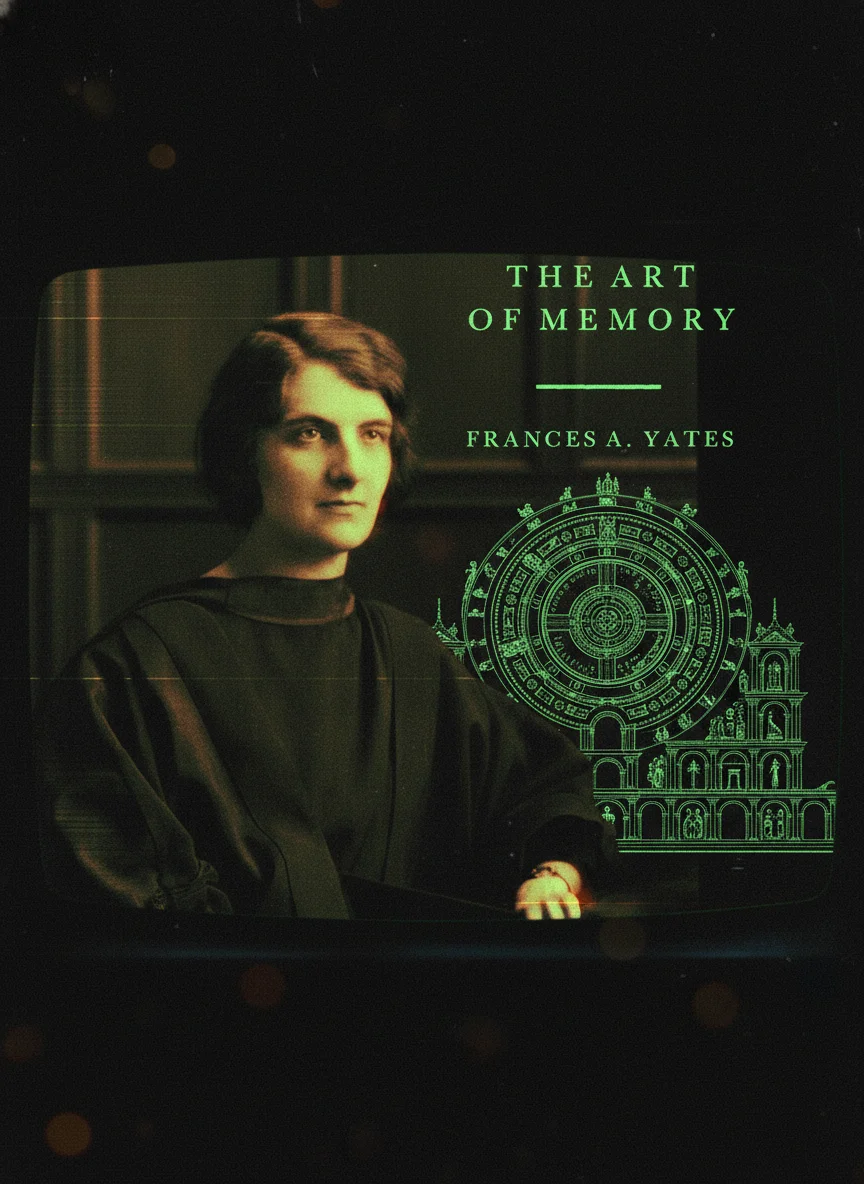
Hexagram 60 digital artifact

Frances Yates - The Art of Memory

Frances Yates (1966)

In 1966, historian Frances Yates published The Art of Memory, revealing a forgotten Renaissance technology: trained memory through imaginary architecture. The classical method, from Simonides through Cicero to Renaissance mages, worked through strict limitation—imagine a building with specific rooms, place vivid symbolic images at precise locations, walk the mental route to retrieve information. Giulio Camillo built a physical Memory Theater. Giordano Bruno constructed elaborate symbolic systems. These weren't primitive tricks—they were sophisticated cognitive architectures, disciplined mental spaces where everything had its place. Hexagram 60 (Limitation) teaches that structure creates freedom: water constrained by bamboo nodes, power increased through defined limits. The Art of Memory embodied this—by limiting where memories could exist (specific architectural loci), Renaissance scholars achieved superhuman recall. Yates uncovered how this mnemonic discipline shaped Western consciousness: the memory palace wasn't just storage, it was thinking itself. Structured limitation of mental space generated power modern unlimited databases can't replicate.

Historical Context

Period
Zhou Dynasty
Oracle Bone Etymology
Water (☵) above, Lake (☱) below—water over lake, limitation through defined structure, economy of means creating greater effect.
Traditional Use
The classical text describes limitation as necessary for power. Water fills the lake precisely to its boundaries. Unlimited flow scatters and weakens. Defined limits concentrate force. The superior man creates institutions and measures moral conduct through deliberate limitation.

Lines

Line 1: 不出戶庭無咎

not; without; does, will not; to avoid
chūgoing out, past, beyond; leave, depart
the door, gate way to, into; gate, door
tíngthe chamber, court, courtyard
no; not; nothing; without; making no
jiùblame; is wrong; a mistake, an error

Line 2: 不出門庭凶

not; without; does, will not; to avoid
chūgoing out, past, beyond; leave, depart
ménthe door, gate way from; gate, door
tíngthe chamber, court, courtyard
xiōngunfortunate, ill-omened; unhappiness

Line 3: 不節若則嗟若無咎

no; without, with no; a lack, want of
jiéboundary, limitation, restraint, limit
ruòsuch; assuming; as if; seeming to be
and consequently, therefore, in due order
jiēlament, complaint, sigh, groan
ruòsuch; this, these
no; not; make no
jiùblame; a mistake, an error

Line 4: 安節亨

ānsecure in; content, at peace with
jiéthe boundary, limit, term, constraint
hēngfulfillment, satisfaction, success, completion

Line 5: 甘節吉往有尚

gānsweet, agreeable, pleasing, tasty, tasteful
jiéboundary, limitation, restraint, term, limit
promising, auspicious, opportune, timely
wǎngto go ahead, proceed, continue
yǒuis, will be; has, holds, will have
shàngworth, merit; honor, value

Line 6: 苦節貞凶悔亡

bitter, galling, embittering, harsh, severe
jiélimitation, restraint, regulation, limit
zhēnpersistence, resolve, firmness; to persist
xiōngis unfortunate, ill-omened; unhappiness
huǐbut, though regret, remorse; repent
wángpass, disappear, dissolve; and move on

Practical Guidance

You've got unlimited storage. Infinite cloud capacity. Search across everything. Retrieval in milliseconds. And you can't find anything because you've never needed to remember where you put it. The external system handles that—until it doesn't. Renaissance scholars faced the opposite constraint: no external storage. Everything worth keeping had to live in memory. Their solution wasn't superhuman capacity—it was disciplined limitation. The Art of Memory: imagine a specific building, assign each room and architectural feature a precise meaning, place vivid symbolic images at those locations. Walk the mental route to retrieve. Camillo's Memory Theater held universal knowledge in defined architectural space. Bruno's symbolic systems compressed entire cosmologies into structured image sequences. These weren't workarounds for missing technology—they were cognitive architectures that generated power modern unlimited storage can't replicate. Hexagram 60: water over lake. Water unconstrained scatters into flood—powerful but useless. Water limited by lake boundaries gains depth, becomes navigable, supports life. The limitation isn't weakness—it's what makes the water functional. Too much limitation (galling restriction) destroys. Right limitation creates structure that amplifies capability. Here's what you've lost: by storing everything externally with perfect search, you've stopped creating internal structure. The Renaissance scholar walking their memory palace wasn't just retrieving facts—they were traversing meaningful relationships, seeing connections the architecture made visible. The spatial structure of the palace generated insights the isolated facts couldn't. Your modern equivalent: you save every article, bookmark every reference, dump every note into searchable systems. Then can't find them when needed because you never built mental architecture around the content. No structure, no relationships, no memorable location. Unlimited storage, zero retrieval power. The classical text: the superior man creates number and measure. Not unlimited acceptance of information flood, but deliberate limitation—these are the sources I trust, this is the framework where new knowledge integrates, these are the key concepts everything else relates to. Disciplined structure creates navigable space. Yates revealed that Renaissance thinking itself was shaped by these memory architectures. The elaborate symbolic systems, the Hermetic correspondences, the theatrical staging of knowledge—these weren't decorative. They were thinking tools, cognitive structures that made vast knowledge tractable through disciplined limitation. You can't replicate the full Art of Memory—you have external systems and they're useful. But you've lost the principle: structure through limitation creates power. Try this: instead of saving everything, create an explicit architecture for one domain you're mastering. Define the key concepts (your architectural loci). Place new knowledge at specific locations in that structure (symbolic images at designated spots). Walk the mental route regularly. The limitation—you can't fit everything into this architecture—is the feature, not the bug. It forces judgment about what matters. It creates memorable spatial relationships. It generates the depth that comes from constrained, structured understanding rather than scattered unlimited accumulation. Water over lake. Define the boundaries of the lake deliberately. Let water fill to that edge, gaining depth and power through limitation. Unlimited information scatter is flood. Disciplined architectural structure is mastery. The Art of Memory knew this five centuries before we forgot it.

Transformations

When changing lines appear in a reading, this hexagram can transform into another.

Get an interactive reading with this hexagram

Try the Oracle →