Judgment
The Family. The perseverance of the woman furthers. Here: Murph's persistence. She doesn't forget. She doesn't forgive easily. But she solves the gravity equation—because he's still her father, and she's still trying to save him, even when she's thirty-five and he hasn't replied in decades. The structure holds.
Image
Wind comes forth from fire: the image of The Family. Thus the superior man has substance in his words and duration in his way of life. Cooper's promise—'I'm coming back'—is substantial because it's based on real love. It endures because the role endures. But duration has a cost. Words become ghosts across time.
Digital Artifact
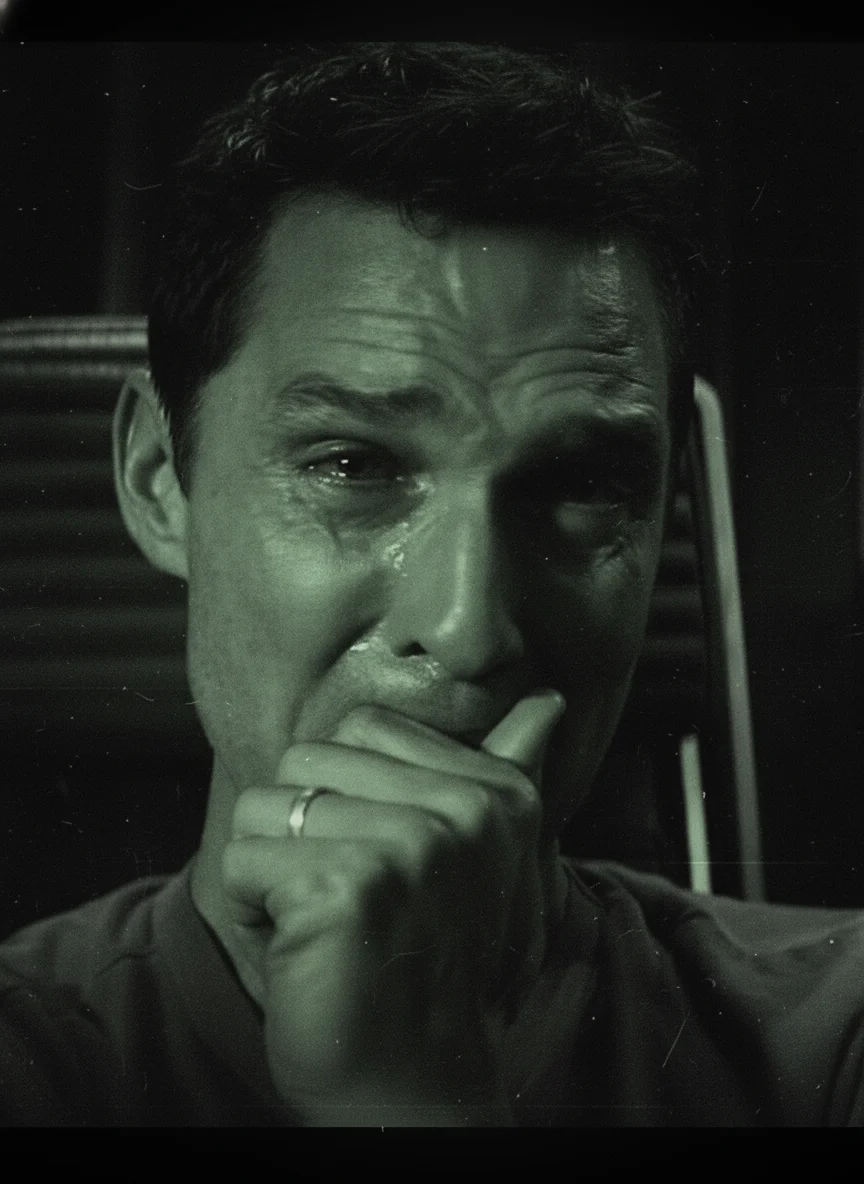
Interstellar: 23 Years of Messages
Christopher Nolan (2014)
Cooper returns to the Endurance after one hour on Miller's planet. Time dilation: twenty-three years, four months, eight days have passed outside. His crewmate Romilly has aged. His children have aged. There are messages waiting. He watches them all in one sitting. Tom at fifteen, excited about his girlfriend. Murph at fifteen, furious he promised to come back. Tom in his twenties, now married, now a father—Cooper's a grandfather and didn't know. Murph in her thirties, coldly professional: "I know you're never coming back." The intervals between messages grow longer. They stop expecting him. Wind over Fire (☴☲): gentle influence above, fierce attachment below—the structure persists even when contact breaks. Cooper is still their father. They are still his children. Hexagram 37 is *The Family*: roles that endure because they're constitutive, not conditional. Distance doesn't dissolve the structure. It distorts it until it hurts.
Historical Context
- Period
- Zhou Dynasty
- Oracle Bone Etymology
- Wind (☴) above, Fire (☲) below—the Gentle mounted on the Clinging. Wind coming forth from fire: influence radiating outward from the hearth, warmth spreading from the family center.
- Traditional Use
- Wilhelm: 'The Family. The perseverance of the woman furthers.' The hexagram represents the fundamental structure of human relationships—roles defined not by proximity but by nature. Each line maps a family member: father, mother, son, daughter. The structure holds whether members are present or separated across spacetime.
- Character Analysis
- 家人 (jiā rén): 'Family members.' The character 家 shows a pig under a roof—the literal household, the place where life is sustained. But in Hexagram 37, it's the *relationships* that matter, not the dwelling. Cooper's family persists across 23 years and lightyears because the roles are real. He's still a father. That's not revocable.
- Energy State
- Wind generated by fire—gentle influence spreading outward from intense inner heat. The family hearth radiates warmth even when physically distant. Read bottom to top: the clinging fire of attachment creates movement, breath, the gentle persistence of wind carrying presence across distance.
- Trigram Symbolism
- ☴ Wind (Upper) - Gentle, penetrating, reaching across space ☲ Fire (Lower) - Clinging, attachment, the hearth that cannot be moved Influence that endures through separation.
Sources
Lines
Line 1: 閑有家悔亡
Line 2: 無攸遂在中饋貞吉
Line 3: 家人嗃嗃悔厲吉婦子嘻嘻終吝
Line 4: 富家大吉
Line 5: 王假有家勿恤吉
Line 6: 有孚威如終吉
Practical Guidance
Transformations
When changing lines appear in a reading, this hexagram can transform into another.
Get an interactive reading with this hexagram
Try the Oracle →