Hexagram 20:

guān perspective; observing, comprehending

By Augustin Chan · Last updated 2025

Upper TrigramWind
Lower TrigramEarth

Judgment

guānperspective; observing, comprehending
guàncleansing, purification, hand ablution
érbut still, and then, yet; still, then, yet
not, no, without, with no
jiànsacrifice, offering, worship, reverence
yǒubeing, holding, staying; remembering
true, sincere; good faith, promises, trust
yóngdignified, majestic; imposing, great
ruòassumes; is as good as; seems, looks like

Contemplation. The ablution has been made, but not yet the offering. Full of trust they look up to him. The sacred pause between preparation and action—when observation itself becomes transformative, when watchers become teachers.

Image

fēngthe wind
xíngmoves, travels, wanders, goes, passes
the earth, ground, land
shàngover, across, above
guānperspective; observing, comprehending
xiānthe ancient, early, original, former, founding
wángsovereigns, kings, rulers, fathers
accordingly, therefore, thus
xǐngvisit; study, examine, inspect, watched
fāngthe regions, domains; bearings, four directions
guānperceived, observed, comprehended
mínthe people, society, citizens
shèto found, establish, base, set up, devise
jiàothe teaching, instruction, doctrines

The wind blows over the earth: the image of Contemplation. Thus the ancient kings visited the regions of the world, contemplated the people, and gave them instruction. The CEO who reads user feedback, the astronaut who photographs Earth—observation that transforms into teaching.

Photographic Perspective Shift
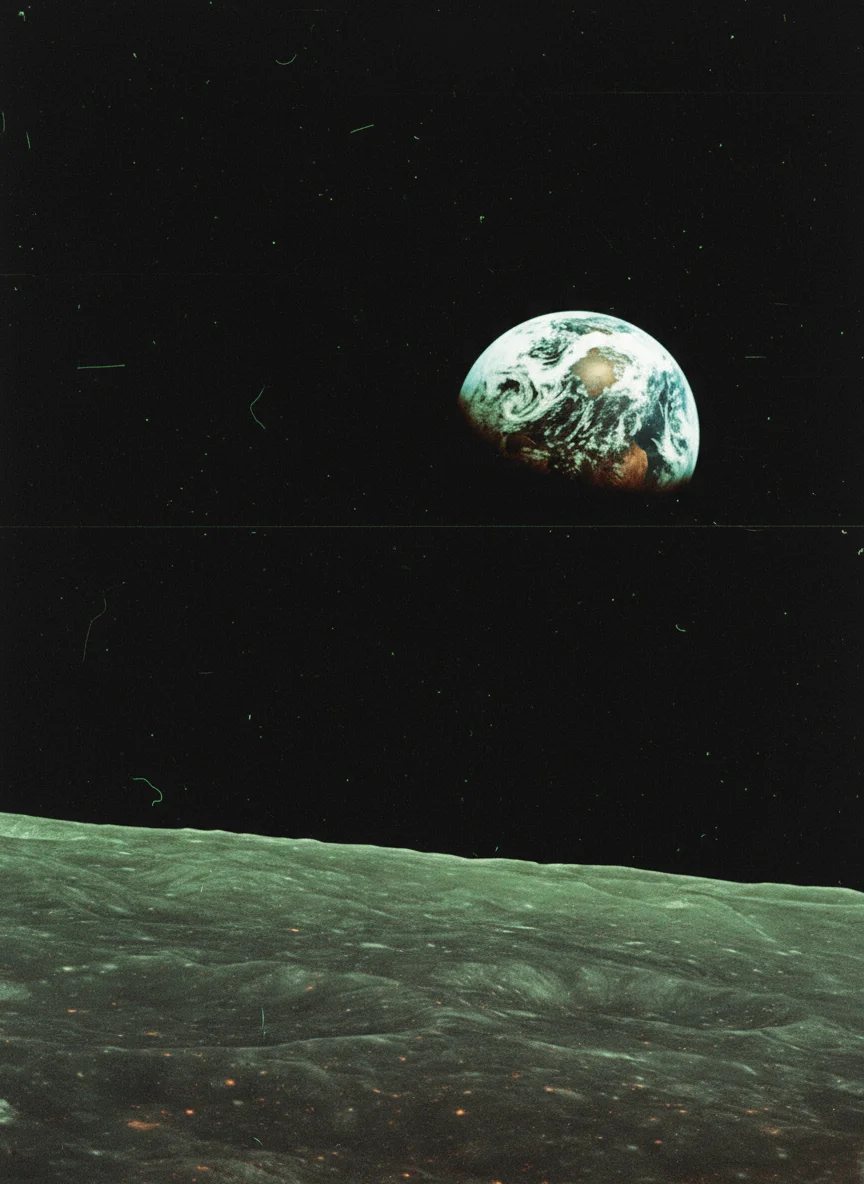
Hexagram 20 digital artifact

Earthrise — Apollo 8, Lunar Orbit, Christmas Eve 1968

William Anders, Frank Borman, Jim Lovell (1968)

December 24, 1968, lunar orbit: Apollo 8 comes around the dark side of the moon. William Anders looks out the window. Earth—brilliant blue, cloud-swirled, rising above grey lunar desolation. "Oh my God, look at that picture over there!" Anders grabs the Hasselblad. Borman: "Hey, don't take that, it's not scheduled." Anders: "Hand me a color film, quick." He takes the shot. This is guan (觀) made visible: contemplation. Wind above Earth—the spacecraft observes while being observed. Three astronauts watch Earth; Earth watches them. The image becomes example. Anders later: "We came all this way to explore the moon, and the most important thing is that we discovered the Earth." The classical text says: contemplation both as viewing and being an example. Apollo 8's mission was lunar reconnaissance. Its achievement was perspective. That photo—Earthrise—did more than any speech to shift human consciousness. It launched the environmental movement, made borders look absurd, rendered nationalist rhetoric small. Borman read from Genesis on live broadcast: "In the beginning..." But what they really transmitted was the view from the tower—elevated perspective showing the connected whole.

Historical Context

Period
Zhou Dynasty
Oracle Bone Etymology
Wind (☴) above, Earth (☷) below—wind blows over the earth, touching everything, changing everything.
Traditional Use
Guan means contemplation, observation, watching from elevated vantage point. The text describes the moment between ritual purification and offering—deepest concentration before action. Ancient Chinese towers served double purpose: observation post (looking out) and landmark (being seen from afar).

Lines

Line 1: 童觀小人無咎君子吝

tóngchild's, childlike, childish, youthful, naive
guānperspective, observation, comprehension
xiǎofor little, small, common, average
rénpeople, folk, persons, ones, individuals
no; not; nothing; are without; no harm done
jiùblame; is wrong; a mistake; harm
jūnbut for a noble, worthy, honored
young one, heir, disciple
lìnan embarrassment, humiliation, disgrace

Line 2: 闚觀利女貞

kuīa pry, spy, peeping (as through door cracks)
guānperspective, observation, comprehension
reward, serve, profit, favoring
a young lady, maiden, girl, woman
zhēnpersistence, determination, resolve, truth

Line 3: 觀我生進退

guānperceiving, observing, comprehending
our, my own
shēnglives, existences; life's courses, growth
jìnas, in, to advance, going forth
退tuìand, or retreat; draw, pull back

Line 4: 觀國之光利用賓于王

guānperceiving, observing, comprehending
guóa country, domain, realm, states
zhī...'s; in, with its, their
guāngglory, splendor, distinction, wonders
it is worthwhile, beneficial, gainful
yòngand useful, productive, practical
bīnbeing a guest, visitor; to visit; to call
to; with; upon
wángits, their, the sovereign, king, rulers

Line 5: 觀我生君子無咎

guānperceiving, observing, comprehending
our, my own
shēnglives, existences; life's courses, growth
jūna noble, worthy, honored
young one, heir, disciple
avoids, escapes; is without; does, makes no
jiùblame; wrong; harm; mistake, errors

Line 6: 觀其生君子無咎

guānperceiving, observing, comprehending
another's, their, others'
shēnglives, existences; life's courses, growth
jūna noble, worthy, honored
young one, heir, disciple
avoids, escapes; is without; does no
jiùblame; wrong; harm; mistake, errors

Practical Guidance

You need distance. Not physical—though that helps—but perspective distance. You're too close to see the pattern. Step back. Go to orbit. Anders, Borman, and Lovell went to the moon to study lunar landing sites. That was the mission. But what they actually accomplished was giving Earth perspective on itself. Sometimes the real work isn't the assigned work—it's what you discover when you get distance from the problem you thought you were solving. Here's the contemplation pattern: first, you're executing tasks (piloting spacecraft, checking instruments, following mission plan). Then something shifts—you look out the window, see the whole system from outside, realize the original framing was too narrow. That's when contemplation becomes teaching. Anders didn't schedule that photo. He took it because the view demanded documentation. Your equivalent: step back from tactical execution. What's actually happening in your system? Not what you intended—what's the observed reality? You're not contemplating your thoughts about your project. You're contemplating your project's actual effects on the world. Different things entirely. The progression: boy-like contemplation (narrow view), self-examination (does this align with principles?), influence through example (others watching your choices), sage liberated from ego (understanding laws larger than personal ambition). You're probably somewhere in the middle—examining whether your work merits continued investment, whether you're positioned to be the example others need. Take the perspective shift seriously. Go somewhere high—literally, if possible. Look at your work from lunar orbit. Most of what seemed important from ground level vanishes at that distance. What remains visible? That's what actually matters. Build for that.

Transformations

When changing lines appear in a reading, this hexagram can transform into another.

Get an interactive reading with this hexagram

Try the Oracle →