Hexagram 10:

respectful conduct, taking proper steps, treading

Upper TrigramHeaven
Lower TrigramLake

Judgment

taking proper steps; treading on, upon
tiger
wěitail
without; if it does not, fails
diéto bite, eat; gnaw, chew
rénone; person, participant, performer
hēngfulfillment, satisfaction, success

Treading. Treading upon the tail of the tiger—it does not bite. Success. When procedure is followed correctly, even dangerous situations can be navigated safely.

Image

shàngabove
tiānheaven, the sky
xiàbelow
lake, pond, pool, marsh
respectful conduct
jūnnoble, worthy, honored
young one, heir, disciple
accordingly, therefore, thus
biànarticulates, distinguishes, discusses
shàngabove, high, lofty, superior
xiàbelow, low, lowly, subordinate
dìngto resolve, steady, settle, secure, fix
mínhumanity's; the human, people's
zhìdirection, focus, will, purpose, ambition

Heaven above, lake below: the image of Treading. Thus the superior man discriminates between high and low. Deckard knows the difference between human and replicant, between tester and tested. The protocol maintains this distinction.

Digital Artifact
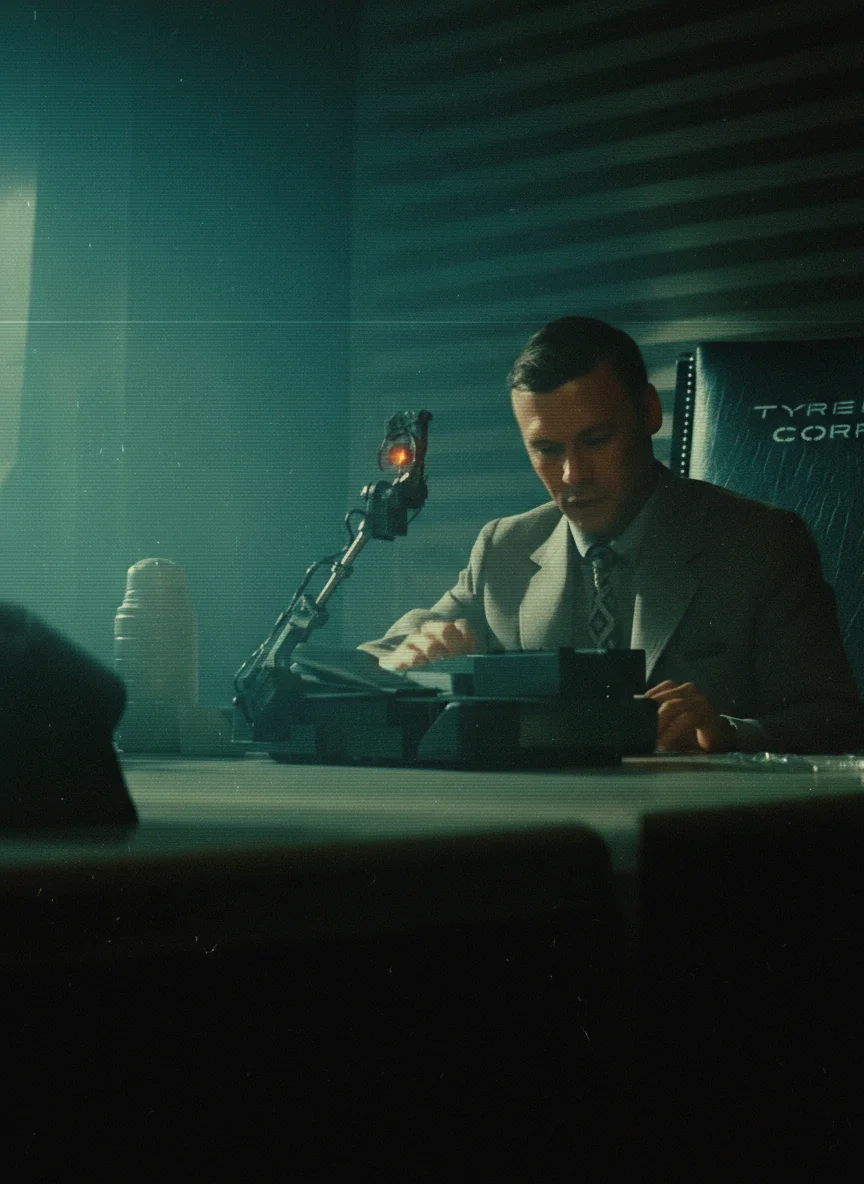
Blade Runner's Voight-Kampff Protocol

Ridley Scott / Hampton Fancher / Philip K. Dick (1982)

Deckard administering the Voight-Kampff test in Blade Runner is conducting oneself correctly in danger. The test—questions provoking emotional response, measuring pupil dilation—is pure procedure. One wrong move and the subject (possibly a combat-model replicant) could snap your neck. But Deckard treads carefully, maintains the ritual. Small and cheerful (human) treading upon large and strong (replicant). Heaven above, Lake below—the weak following the strong through proper conduct. When Rachael takes the test, Deckard follows protocol perfectly. He doesn't presume. The tiger doesn't bite because the conduct is correct.

Historical Context

Period
Zhou Dynasty
Oracle Bone Etymology
Heaven (☰) above, Lake (☱) below—strength above, joy below. The weak follows the strong without presumption.
Traditional Use
The classical text describes this as the right way of conducting oneself when the small must interact with the strong. Proper conduct transforms potentially dangerous situations.

Lines

Line 1: 素履往無咎

simple, plain, authentic, basic
treading, stepping
wǎngforward, onward, ahead, beyond
nothing; no, not; without, with no
jiùwrong; mistake, error

Line 2: 履道坦坦幽人貞吉

tread, step, walk, track
dàoway, course, path, trail, road
tǎnlevel, plain, flat; in peace
tǎnsmooth, easy; contentment, composure
yōuobscure, secluded, solitary
rénone's, person's; hermit's, recluse's
zhēnpersistence, determination, resolve, focus
promising, fortunate, opportune, timely

Line 3: 眇能視跛能履履虎尾咥人凶武人為于大君

miǎoone-eyed; weak, feeble-sighted
néngcan; are still able, capable of
shìto see, watch, look, observe, regard
lame, limping
néngcan; are still able, capable of
to walk, tread, take steps
treading, stepping, walking
tiger
wěitail
diéthe bitten, eaten
rénone's, person's
xiōngmisfortune, bad luck, failure, disappointment
military, martial
rénone, person, man; warrior
wéiacts, serves, performs, plays the part, works
in the place of, with respect to, under; for
great, mighty
jūnsuperior, noble, chief, leader, prince

Line 4: 履虎尾愬愬終吉

treading, stepping, walking
tiger
wěitail
pleading, appealing; caution; please
pleading, appealing; prudence; please
zhōngwill end, conclude, result
promise, hope, good fortune; happily

Line 5: 夬履貞厲

guàidetermined; decisive, resolute, serious
tread, steps; treading, stepping
zhēnpersistence, firmness, focus; to persist
stressful, dangerous, rigorous, difficult

Line 6: 視履考祥其旋元吉

shìstudy, examine, look at, observe
footsteps, conduct, performance
kǎoexamine, investigate, inspect
xiángomens, signs, portents, forms, patterns
if, when, where they, these, one has
xuáncome full circle; make a circuit
yuánsupreme, extreme; most, supremely
good fortune; promising, auspicious

Practical Guidance

You're in over your head but you have the protocol. Good. The ritual. The correct procedure for handling something stronger than you. Here's what this probably means: you're interfacing with something that could destroy you if you handle it wrong. Production databases. Live deployment systems. Actual users depending on your code. Maybe a replicant who might be a combat model. The classical text says pleasant manners succeed even with irritable people. Your version: documentation and established procedures let you interact safely with systems that have the power to end you. The junior dev following code review protocol. The system admin running the deployment checklist for the hundredth time, still checking every box. The temptation is to get casual. You know this system, you've done it before, you can skip the boring parts. This is exactly when the tiger bites. Every catastrophic system failure has this moment: someone thought 'I know this well enough to skip the checklist.' That confidence—that presumption of mastery over the strong thing—is where conduct breaks down. Deckard administering the Voight-Kampff test never presumes control. He maintains the form. He stays in his role. He discriminates between high and low, tester and tested, human capability and replicant strength. The replicant doesn't snap his neck because he never gives it reason to. The protocol isn't bureaucracy. It's the accumulated wisdom of everyone who walked this path before you and didn't get bitten. When you're treading on the tail of the tiger, simple conduct—following the established pattern without arrogance—is what keeps you alive. Skip it and find out.

Get an interactive reading with this hexagram

Try the Oracle →