Upper Trigram火
Lower Trigram风
Judgment
鼎dǐnga, the cauldron, crucible, sacrificial vessel
元yuánfirst-rate, excellent; a, the most
吉jípromise, opportunity; promising
亨hēngand fulfillment, satisfaction; offering
鼎。元吉,亨。
Image
木mùthe wood
上shàngover, above, atop, on top of
有yǒuis, there is
火huǒa, the fire, flame
鼎dǐngthe cauldron
君jūna, the noble, worthy, honored
子zǐyoung one, heir, disciple
以yǐaccording to; with, by; uses, applies
正zhèngthe precise, correct, exact(ing); principle(s)
位wèiof placement, position(ing), condition(s)
凝níngto realize, manifest, consolidate, coagulate
命mìnga, the higher law, purpose, order, power
木上有火,鼎。君子以正位凝命。
文明根基
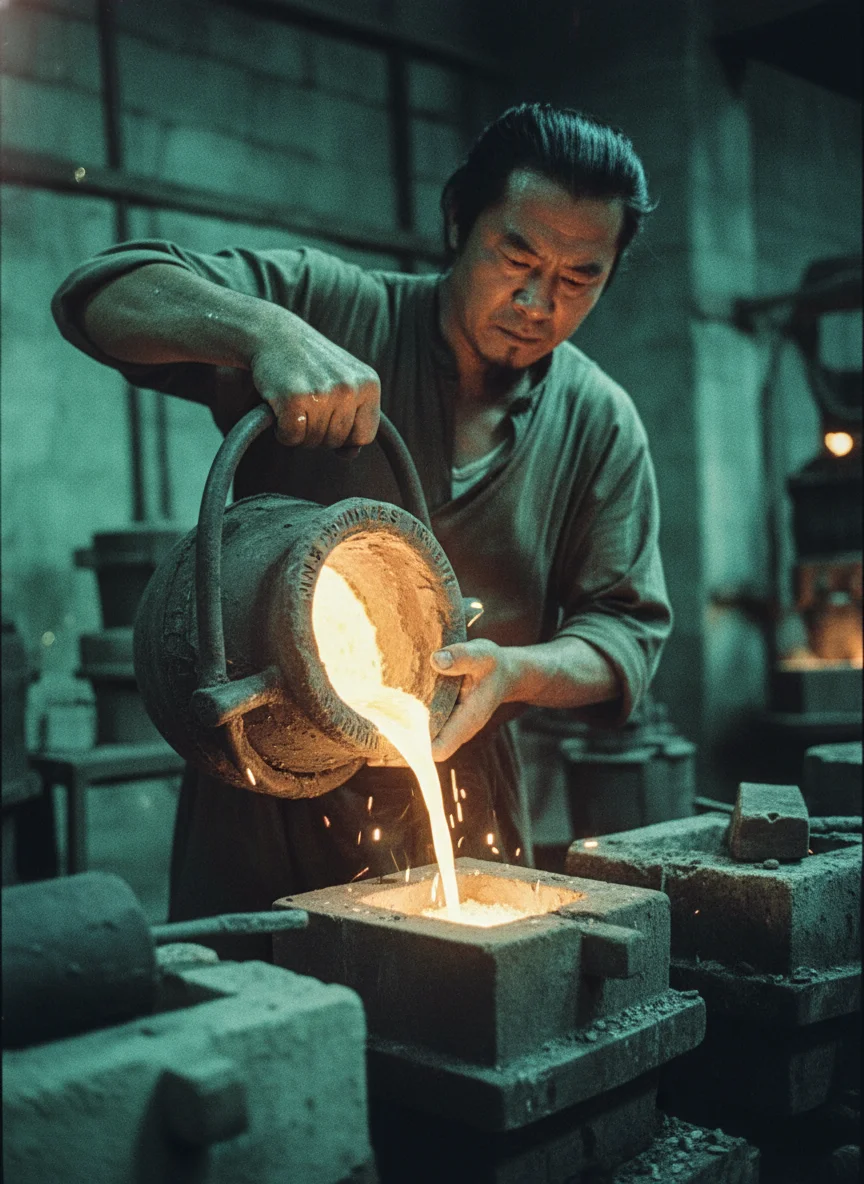
九鼎
大禹 (约公元前2070年)
十三年治水之后——三过家门而不入——大禹收到了新统一疆域九州的贡金。他铸造了九座青铜鼎(九鼎),每座鼎上刻有该州的山川、河流、物产和神灵的图案。原本无形的变得可见。原本混沌的变得有序。 九鼎不仅仅是器皿。它们是天命(天命)的物质化身。拥有九鼎就意味着拥有天下的正统权威。两千年间,九鼎的转移标志着主权的更替:从夏到商到周。当周武王问及「鼎之轻重」时,他问的是天下的轻重。 离上巽下(☲☴):转化之火,滋养之风。鼎居于两者之间——从下方接收原材料,向上方呈献精炼之物。「鼎折足」意味着器皿无法承载;正统已经破裂。「鼎耳革」意味着提手已被腐蚀;器皿无法再被举到其应有之位。 禹的双手触碰熔融的青铜:使文明对自身可见的原初行为。元吉,因为这是形式得以承载意义穿越时间的那一刻。
Historical Context
- Period
- 周朝
- Oracle Bone Etymology
- 离(☲)在上,巽(☴)在下——火由风生,转化得以持续。鼎接收并精炼。
- Traditional Use
- 鼎(鼎卦)描述了转化祭品、承载正统、使祭祀得以进行的礼器。鼎的三足代表稳定;两耳使其能被提起。卫礼贤译:「元吉,亨。」
- Character Analysis
- 鼎(dǐng)描绘三足两耳的礼器形象。在甲骨文中,它展示了鼎的侧面轮廓,内含之物清晰可见。这个字后来成为部首(鼎部)和计量单位。问鼎意味着觊觎最高权力。一言九鼎意味着一诺千金。
- Energy State
- 下方之风滋养上方之火。鼎居于两者之间——从下接收燃料,向上辐射转化。能量按正确的循环流动:原材料进入,精炼之物呈出。器皿使转化成为可能,自身却不被消耗。
- Trigram Symbolism
- ☲ 火(上卦)——光明、转化、中女 ☴ 风(下卦)——渗透、柔顺、长女 火上风下:由稳定气息滋养的烹饪之火。转化而不毁灭的火焰。鼎是输入与输出之间的稳定点。
Sources
Lines
Line 1: 鼎顛趾利出否得妾以其子無咎
鼎dǐngthe cauldron('s)
顛diānwith upended
趾zhǐfeet
利lìworthwhile
出chūto expel
否pǐthe stagnant(ating
得déto accept
妾qièthe concubine
以yǐfor (the sake of)
其qíher
子zǐa child
無wúno
咎jiùblame
Line 2: 鼎有實我仇有疾不我能即吉
鼎dǐngwhen
有yǒuhas
實shícontent(s)
我wǒour
仇chóurival
有yǒuwill have
疾jíanxiety(ies)
不bùit
我wǒour
能néngin
即jíto pursue
吉jípromising
Line 3: 鼎耳革其行塞雉膏不食方雨虧悔終吉
鼎dǐngthe cauldron('s)
耳ěrears
革géchanged
其qíits
行xíngfunction
塞sèis
雉zhìthe pheasant's
膏gāorich
不bùis not
食shíeaten
方fānga sudden
雨yǔrain
虧kuīwould diminish
悔huǐthe regret(s)
終zhōngat
吉jípromising
Line 4: 鼎折足覆公餗其形渥凶
鼎dǐngthe cauldron('s)
折zhéa broken
足zúleg
覆fùoverturning
公gōngthe duke's
餗sùsimple meal
其qíhis
形xíngperson
渥wòis soaked
凶xiōngwoe
Line 5: 鼎黃耳金鉉利貞
鼎dǐngthe cauldron('s)
黃huánggolden
耳ěrears
金jīnand metal
鉉xuàngrip
利lìit is worthwhile
貞zhēnto persist
Line 6: 鼎玉鉉大吉無不利
鼎dǐngthe cauldron('s)
玉yùa jade
鉉xuàngrip
大dàmuch
吉jípromise
無wúwithout
不bùnot
利lìworthwhile
Practical Guidance
你有需要转化的东西。
也许是需要结构才能成为技能的原始天赋。也许是需要形式才能成为连贯项目的散乱想法。也许是资源——时间、金钱、注意力——需要一个器皿才能成为投资而非消散。你有材料。你需要鼎。
大禹在文明尺度上理解这一点。他花了十三年治水——开渠、移土、测绘地形。完成之后,他拥有了一个统一的疆域,却没有这种统一的可见象征。九州进贡金属。他可以铸造武器,或囤积起来,或作为礼物分发回去。他选择铸造鼎。
天才之处在于鼎所承载的内容:不仅仅是祭品,还有地图。每座鼎上刻有该州的图景——山川、河流、物产、神灵。九鼎使原本无形的变得可见。它们将混沌转化为清晰。因为它们是用于祭祀的礼器,它们连接了人间与天界。鼎不仅仅是容纳;它转化。
卦象的教导是:转化需要稳定的器皿。没有锅就无法烹饪。没有容器就无法精炼。风滋养火,但火需要一个可以集中热量的地方。「君子以正位凝命」——他成为转化流经的器皿。
危险是破裂的鼎。「鼎折足,覆公餗。」如果你的容器缺乏完整性,进入的东西就无法被正确转化;它会泄漏,浪费。三足是你的根基。两耳是你如何被提升到更高目的。折足意味着不稳定。耳革意味着你的把手已被腐蚀——你无法再被带到你需要去的地方。
想想你正在建造什么样的器皿。它稳定吗?它有适当的把手——关系、结构、协议——使它能被提起吗?它能接收原材料并将其转化为精炼之物吗?
禹的鼎延续了两千年,因为它们是为其目的以绝对精准铸造的。它们不是装饰性的。它们不是实验性的。它们是承载主权跨越时间的正确器皿。
元吉:你有火,你有燃料。现在建造能承载你需要进行的转化的鼎。
Transformations
When changing lines appear in a reading, this hexagram can transform into another.
Get an interactive reading with this hexagram
Try the Oracle →